As an Amazon Associate this site earns from qualifying purchases.
Quick Picks
| Pick | Product | Why | Link |
|---|---|---|---|
| Best for regular ironing | Rowenta Iron Steamer for Clothes, Stainless Steel Soleplate Steam Iron | 1700 watts, stainless steel soleplate, Microsteam holes, auto-off [S4] | Check Price on Amazon |
| Best for hanging garments | BLACK+DECKER Press & Steam 2-in-1 Iron & Garment Steamer | Doubles as a garment steamer, so it handles clothes you cannot lay flat [S3] | Check Price on Amazon |
Disclosure: We earn a small commission from qualifying Amazon purchases at no extra cost to you.
As an Amazon Associate we earn from qualifying purchases. This page contains affiliate links, and we may receive a commission if you buy through them — at no extra cost to you.
As an Amazon Associate, we earn from qualifying purchases.
Last Updated: September 2026
The Rowenta vs Black and Decker steam iron question usually gets answered badly, because the two products people put head-to-head here are not actually the same kind of appliance. One is a conventional 1700-watt stainless-steel iron. The other is a hybrid that irons flat and steams hanging. That difference matters more than any brand loyalty, so let's start there.
A quick, necessary note on what this page is: it is a specification comparison. This website does not do product research, and nobody here has ironed a shirt with either unit. What follows is drawn from the verified Amazon product records for both ASINs, retrieved 2026-09-05, and from reasoning about what those published specifications imply.
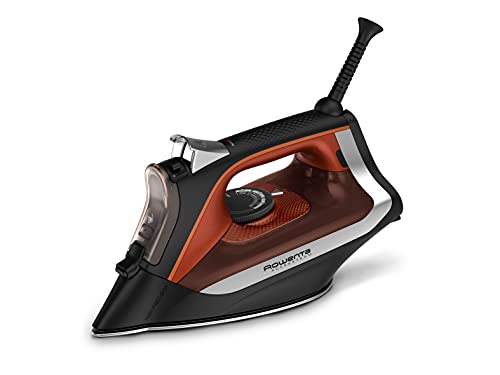
- POWERFUL STEAM: Rowenta steam iron for clothes delivers a shot of steam of 180g/min to handle even the most stubborn creases
- ULTIMATE STEAM DISTRIBUTION: This iron steamer for clothes has 300 micro-holes that offer exceptional steam distribution for efficient and effective ironing sessions
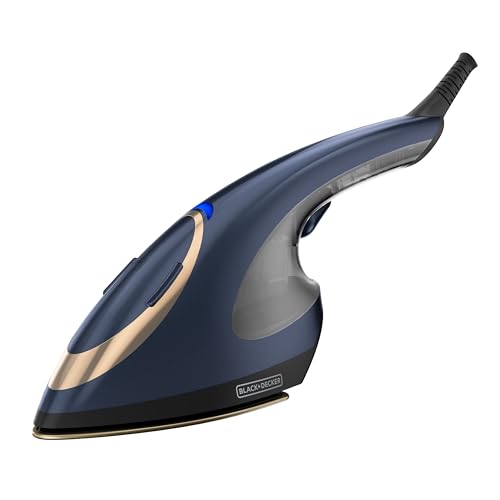
- 2-in-1 Iron and Steamer: Achieve professional results with an all-in-one ironing and steaming solution
- Advanced One Temp Technology: One simplified setting so theres no guesswork. Designed for easy, safe use on all ironable fabrics
Quick Answer
Buy the Rowenta if you iron regularly and want a conventional iron. Rowenta publishes a stainless steel soleplate, Microsteam holes, 1700 watts, a lightweight build and auto-off for the DW2360 [S4]. That is a full-featured traditional iron spec, and 1700 watts is real heating headroom for a household iron.
Buy the BLACK+DECKER if your problem is hanging clothes, not a laundry pile. The Press & Steam is described by its own product record as a 2-in-1 iron and garment steamer [S3]. If half your wrinkle problem is a blazer on a hanger or a dress you cannot lay flat, a single-purpose iron simply cannot solve it.
Buy neither on spec alone if you need published steam output in grams per minute. Neither product record supplies a g/min steam rate, and this page will not invent one.
Both prices move constantly on Amazon, so check the current price rather than trusting any figure written into an article.
Head-to-Head Comparison Table
| Feature | Rowenta Iron Steamer for Clothes, Stainless Steel Soleplate Steam Iron | BLACK+DECKER Press & Steam 2-in-1 Iron & Garment Steamer |
|---|---|---|
| Model | DW2360 [S4] | Press & Steam [S3] |
| Format | Steam iron [S4] | 2-in-1 iron and garment steamer [S3] |
| Soleplate material | Stainless steel [S4] | Not published in the product record |
| Steam distribution | Microsteam holes [S4] | Not published in the product record |
| Wattage | 1700 W [S4] | Not published in the product record |
| Weight class | Described as lightweight [S4] | Not published in the product record |
| Auto shut-off | Yes [S4] | Not published in the product record |
| Colorway | Black [S4] | Not published in the product record |
| Price | Check Price on Amazon | Check Price on Amazon |
That column of blanks on the right is not padding — it is the single most useful thing on this page. Rowenta publishes a detailed spec line for the DW2360; the BLACK+DECKER record supplies the product's format and nothing more [S3]. You can shop the Rowenta on numbers. You cannot shop the BLACK+DECKER on numbers, because they are not there to read.
Design & Build Quality
Stainless versus aluminum soleplate is the question people search most, so here is the honest version. Rowenta states stainless steel for the DW2360 soleplate [S4]. Stainless is chosen for glide and for scratch resistance against zippers, buttons and snaps — it is a harder face than bare aluminum. The BLACK+DECKER record does not state a soleplate material at all, so this page cannot tell you whether the Press & Steam is aluminum, coated aluminum or stainless. Anyone who tells you otherwise is guessing.
Rowenta also describes the DW2360 as lightweight [S4]. Read that as a trade-off, not a pure win. A light iron is easier on the wrist through a stack of shirts, but it also means your arm supplies more of the pressing force on stubborn linen creases, because the tool's own mass is not doing it for you.
The BLACK+DECKER's build story is its shape. A 2-in-1 iron and garment steamer [S3] has to work in two orientations — face down on a board, and upright against fabric on a hanger. Hybrids of that type generally accept design compromises to do both, and the product record does not publish the details of how this one resolves them.
Winner: Rowenta. Not because the BLACK+DECKER is built badly, but because a published stainless steel soleplate [S4] is a verifiable build claim and an unpublished soleplate is not.
Features & Functionality
Here's the thing: this is where the BLACK+DECKER earns its place on the page.
The Rowenta's feature set is classic and well documented — Microsteam holes, auto-off, stainless soleplate, 1700 watts [S4]. Microsteam holes describe steam distributed through many small ports rather than a few large ones, which is a design aimed at spreading vapor across the plate instead of concentrating it. Auto-off is the feature that matters most for safety-minded buyers; CPSC's consumer safety mission covers exactly this class of household product [S1], and an iron that powers itself down unattended removes a real hazard from the equation.
But the Rowenta cannot steam a hanging garment properly, because it is an iron. The BLACK+DECKER is explicitly a 2-in-1 iron and garment steamer [S3]. For a wardrobe of suits, dresses, drapes and anything with structure you would rather not flatten, that dual capability is not a gimmick — it is the whole reason to buy it.
Winner: BLACK+DECKER Press & Steam 2-in-1 Iron & Garment Steamer. It does something the Rowenta structurally cannot do [S3].
Performance
Be careful with this section, because performance is where fabricated numbers usually appear. Neither listing publishes steam output in grams per minute, heat-up time, tank capacity or shot-of-steam figures. So the only performance-relevant number available is Rowenta's 1700 watts [S4].
What does 1700 watts actually buy you? Wattage is the rate at which the iron converts electricity to heat. A higher figure suggests the soleplate recovers temperature faster after you press it into damp cotton and the plate cools, and it suggests more energy available to boil water into steam continuously. It is a reasonable proxy for how well an iron holds up across a long session rather than a short touch-up. That is an inference from the published rating, not a measured result.
The BLACK+DECKER's wattage is not published in its product record, so there is no comparison to draw. That cuts both ways: it does not mean the unit is underpowered, it means the figure is unavailable.
Winner: Rowenta, on the narrow and specific ground that 1700 watts is a published, checkable heating rating [S4] and the alternative has no published figure to weigh against it.
Price & Value
Both products are sold on Amazon with prices that fluctuate, so check the live price on each listing [S3][S4] before deciding. What can be said about value is structural rather than numerical.
Is the Rowenta iron worth the money? If the price you see is close to the BLACK+DECKER's, yes — you are getting a documented spec sheet, a stainless steel soleplate, 1700 watts and auto-off [S4] instead of a product record that documents format only. Paying for specifications you can verify is a rational preference.
The BLACK+DECKER's value case is arithmetic of a different kind: it replaces two appliances with one [S3]. If you would otherwise buy an iron and a separate handheld steamer, a single 2-in-1 unit is the cheaper cabinet.
Winner: BLACK+DECKER Press & Steam 2-in-1 Iron & Garment Steamer, purely on the two-appliances-in-one logic [S3] — with the caveat that hybrids typically compromise on both jobs rather than beating a dedicated tool at either.
Customer Reviews Summary
No star ratings, review counts or owner-feedback themes were supplied for either ASIN in the data behind this page, so there is nothing to summarize and nothing will be invented. Read the current review distribution directly on each listing [S3][S4] and weight recent reviews most heavily, since manufacturing runs change.
Winner: neither. A category with no evidence has no winner.
Rowenta Iron Steamer for Clothes, Stainless Steel Soleplate Steam Iron — Best for regular household ironing
The DW2360 is the conventional choice, and the spec line is the reason. Rowenta lists a stainless steel soleplate, Microsteam holes, 1700 watts, a lightweight body, auto-off and a black finish [S4]. For someone who irons work shirts weekly, that combination is the sane pick.
Pros
- Stainless steel soleplate is published, not inferred [S4].
- 1700 watts gives the iron real heating headroom for continuous steam [S4].
- Auto-off addresses the classic unattended-iron hazard [S4][S1].
- Microsteam hole pattern is designed to spread steam across the plate rather than concentrate it [S4].
- It cannot steam hanging garments the way a dedicated or hybrid steamer can — it is an iron.
- Rowenta does not publish a steam output rate, tank capacity or heat-up time in this product record, so those are unknown [S4].
- "Lightweight" cuts against you on heavy creases, where iron mass does part of the work for you [S4].
BLACK+DECKER Press & Steam 2-in-1 Iron & Garment Steamer — Best for hanging garments and small spaces
The Press & Steam's pitch is right in its name: one appliance that presses flat and steams upright [S3]. For apartment dwellers, travelers and anyone whose wardrobe is more blazers than bedsheets, that is genuinely useful.
Pros
- It is explicitly a 2-in-1 iron and garment steamer, covering both flat and hanging garments [S3].
- One unit instead of two saves storage space and a second purchase [S3].
- The product record does not publish wattage, soleplate material, weight or auto shut-off, so you cannot compare it on specification at all [S3].
- With no published soleplate material, there is no way to assess glide or scratch resistance against the Rowenta's stated stainless steel plate [S3][S4].
- Dual-purpose designs generally trade some capability at each job compared with a dedicated tool — a structural expectation, not a measured finding.
Which Should You Buy?
- You iron shirts most weeks and want the best iron of the two. Rowenta DW2360.
- Your wrinkles are on hangers — suits, dresses, drapes. BLACK+DECKER Press & Steam, because it is the only one of the two that steams as well as irons [S3].
- You live in a small apartment and want one appliance total. BLACK+DECKER, for the same 2-in-1 reason [S3].
- You have wrist or shoulder strain. Rowenta lists the DW2360 as lightweight [S4], which is the only weight-related claim published for either unit.
- You leave the house in a hurry and worry about the iron. Rowenta, for the published auto-off [S4].
- You want to compare on hard steam numbers. Neither. No steam output rate is published for either product [S3][S4]; buy on format and soleplate instead.
How We Research
Every specification on this page comes from the Amazon Creators API verified product records for ASIN B07SH1PKC3 and ASIN B0CKGBBBYX, retrieved 2026-09-05, cross-checked against the live retailer listings [S3][S4]. We read those records closely, note which fields each manufacturer actually populates, and say plainly when a field is empty rather than filling it from memory. Safety framing for household appliances follows general consumer-protection guidance published by CPSC [S1] and USA.gov [S2]. No physical testing of any kind takes place here.
Final Verdict
For most buyers, the Rowenta DW2360 is the better iron — and I'd say that on the spec sheet alone. Stainless steel soleplate, 1700 watts, Microsteam holes, auto-off, all published by the manufacturer [S4]. That is a complete, checkable picture of a mid-range steam iron, and it is precisely what the BLACK+DECKER record does not give you.
But "better iron" is not the same as "better buy for you." The BLACK+DECKER Press & Steam wins outright for one specific person: the buyer whose real problem is hanging clothes. A 2-in-1 iron and garment steamer [S3] solves a problem the Rowenta cannot touch, and no amount of wattage changes that.
So: pick by format first, brand second. Flat pile of laundry, Rowenta. Closet full of hangers, BLACK+DECKER.
Frequently Asked Questions
Sources & Methodology
Nothing on this page was ironed, weighed, timed or plugged in — this website does not physically or laboratory-test products, and steam irons are no exception. What we did instead was read the Amazon Creators API verified product records for both ASINs on 2026-09-05 [S3][S4], line by line, and treat the gaps as findings: Rowenta populates soleplate material, wattage, steam-hole design and auto-off for the DW2360, while the BLACK+DECKER record establishes format and stops there. For irons, that kind of reading gets you further than it might in other categories, because soleplate material, wattage and iron-versus-steamer format are the three variables that actually decide which unit suits your wardrobe — but it will not tell you how either one glides, how fast it heats, or how it holds up after two years, and you should treat any page that claims otherwise without testing with suspicion.