As an Amazon Associate this site earns from qualifying purchases.
Quick Picks
| Pick | Product | Why it fits |
|---|---|---|
| Standing home steamer | SALAV GS18 Full-Size Clothes Steamer - 1500W Power | 1500W and a 1.8L tank per the listing, with wheels for storage — Check Price on Amazon |
| Portable handheld steamer | OGHom Steamer for Clothes | 700W, 240ml, marked 120V only — Check Price on Amazon |
Disclosure: We earn a small commission from qualifying Amazon purchases at no extra cost to you.
As an Amazon Associate, we earn from qualifying purchases.Last Updated: September 2026
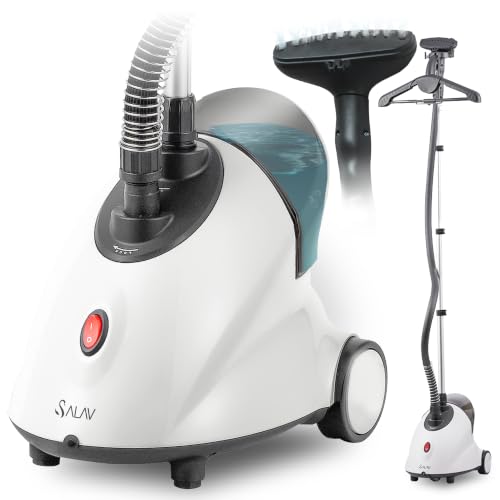
- POWERFUL 1500W STEAMER – HEATS IN 45 SECONDS: Quickly smooth wrinkles with the SALAV GS18 Professional Standing Garment Steamer for Clothes, delivering up to 1500 watts of
- FAST WRINKLE REMOVER FOR ALL FABRICS: Refresh and smooth clothing, dresses, shirts, bedding, curtains, upholstery and more. Gentle steam works across fabrics including silk
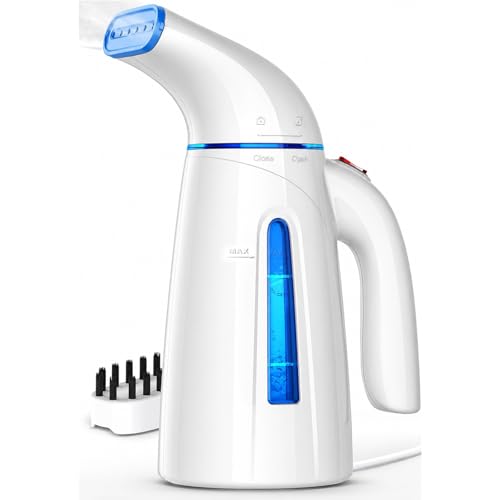
- 240ML capacity, this steamer for clothes produces 15 minutes of continuous steaming to remove wrinkles perfectly
- Leading technology, unique 304 stainless steel heating panel ensures anti rust, anti oxidation and much longer life span than other materials like aluminum
Quick Answer
In the garment steamer vs clothes iron matchup, the split is mechanical, not marketing. An iron presses fabric flat using a hot soleplate plus your downward pressure. A steamer relaxes the fibers with hot vapor while the garment hangs, so nothing ever gets pressed flat — it gets loosened.
That one difference decides almost every buying question. Want a sharp, defined crease down a trouser leg or a collar that stands at attention? That is pressure work, and an iron does it. Want fast wrinkle relief across hanging shirts, curtains, jackets, or fabrics you would rather not put a hot plate against? That is steam work.
One thing to be straight about up front: this page has verified listing data for two steamers and no iron. So the product recommendations below cover steamers only, and the iron side of the argument stays at the category level where it belongs.
- Best for at-home volume steaming: SALAV GS18 Full-Size Clothes Steamer - 1500W Power — the listing pairs 1500W with a 1.8L tank and an adjustable pole, which is a standing-unit setup, not a grab-and-go one.
- Best for domestic travel and touch-ups: OGHom Steamer for Clothes — a 700W handheld with a 240ml tank, listed as 120V only.
- Best for crisp creases and heavy cotton: a clothes iron. No iron in the data set here, so no pick and no link — just the honest category answer.
The Difference Between a Steamer and an Iron, In One Paragraph
A clothes iron is a contact tool: heat plus weight plus your arm, applied through a flat metal plate against a board. A garment steamer is a non-contact tool: a heating element boils water and pushes vapor through a nozzle or hose into hanging fabric, and gravity does the rest of the work as the fibers relax.
Here is the thing most comparisons skip. Steam is present in both. Most irons inject steam through the soleplate too. What the iron adds — and the only thing it adds — is pressure. If a wrinkle needs to be crushed rather than coaxed, no steamer output figure substitutes for that.
Head-to-Head: The Two Steamers With Verified Listing Data
| Feature | SALAV GS18 Full-Size Clothes Steamer - 1500W Power | OGHom Steamer for Clothes |
|---|---|---|
| Format | Full-size standing steamer with adjustable pole and wheels | Handheld portable steamer |
| Rated power | 1500W | 700W |
| Water capacity | 1.8L | 240ml |
| Stated steam duration | 60 minutes of garment steam | Not stated in the supplied record |
| Voltage note | Not stated in the supplied record | Only for 120V |
| Color stated | White | Not stated in the supplied record |
| Price | ||
| Link | Check Price on Amazon | Check Price on Amazon |
Design & Build Quality
These two are not the same object with different badges. The SALAV listing's adjustable pole and wheels describe a piece of furniture you park in a closet corner; the OGHom listing describes something you hold in one hand over a hotel bathroom rail.
The SALAV tank is listed at 1.8L, which is 1,800ml [S3]. A tank that size has to sit on the floor — which is exactly why the listing bothers to mention wheels.
Winner: OGHom Steamer for Clothes. Not because it is sturdier — nothing in the supplied records speaks to materials or build — but because a 240ml handheld is the design that actually solves a design problem: getting steam to clothes that are not in your laundry room.
Features & Functionality
The SALAV record carries more stated capability on every axis that appears: more watts, more water, and a published run figure. The OGHom record carries one hard constraint instead. The OGHom listing's '(Only for 120V)' note is a real limit for anyone shopping for an international travel steamer, since 120V-only hardware is not the same as a dual-voltage unit [S4].
Also worth flagging for anyone searching steamer vs iron: the listing title for the SALAV GS18 also uses the phrase 'Iron Clothing', but nothing in the supplied record describes a soleplate, a dry-press mode, or temperature settings by fabric type [S3]. Read that as marketing language about the job, not as a claim that the machine presses like an iron.
Winner: SALAV GS18 Full-Size Clothes Steamer - 1500W Power. More stated function, fewer stated limits. Check Price on Amazon
Performance
Power and water are the two inputs a steamer converts into wrinkle relief, and they are the two figures both listings publish. The SALAV listing states 1500W against the 700W stated for the OGHom handheld, a gap of more than two to one [S3]. A heating element with roughly double the rated draw is the one plausibly generating steam faster and holding it steadier through a long session — that is an inference from the wattage, not an observed result, and this website does no product research.
The 60-minute figure in the SALAV listing is the one duration claim available anywhere in this data set. Pair it with the 1.8L tank and the design intent is obvious: work through a rack of clothing without a refill. The 240ml handheld is built for the opposite job — a few garments, then done.
Be clear on the ceiling, though. Neither of these is an iron, so neither will set a crease that survives a commute.
Winner: SALAV GS18 Full-Size Clothes Steamer - 1500W Power, on the strength of the stated 1500W and 1.8L combination for anyone steaming more than two or three items at a time.
Price & Value
No price appears in the records supplied for either unit, so check the current price on Amazon for both before deciding. That makes this a use-case judgment, not a dollar judgment.
Value here is about matching hardware to frequency. If you steam a week of shirts on Sunday, the 1.8L standing unit is the shape that fits. If you steam four garments a month and one suitcase a year, a 240ml handheld is the one you will actually take out of the cupboard.
Winner: split. The evidence supplied does not support a price verdict in either direction.
Customer Reviews Summary
Neither the SALAV nor the OGHom record supplied for this page includes a star rating, a review count, or owner-review themes, so no customer-satisfaction verdict is possible here [S3]. Anyone telling you otherwise about these two specific listings is filling a gap from memory.
What you can do instead: check the live rating distribution on each listing yourself, and check safety history separately. The U.S. Consumer Product Safety Commission publishes recall notices and consumer safety reports for household appliances, and it is the right place to check before buying any heating appliance [S1].
Winner: neither. No rating data, no award.
SALAV GS18 Full-Size Clothes Steamer - 1500W Power — Best for at-home volume steaming
This is the standing-unit answer to the steamer or iron for wrinkles question: a floor machine you roll out, fill once, and work through a rail of clothes with.
Pros
- 1500W rated power, the higher of the two units documented here
- 1.8L tank, which is 1,800ml — roughly 7.5x the handheld
- Listing states a 60-minute garment steam figure, so run length is not a guess
- Adjustable pole and wheels, which is what makes a floor-standing tank practical to store
- Useless as a travel steamer; a wheeled pole unit does not go in a carry-on
- The SALAV record supplied here does not state heat-up time, steam output in grams per minute, hose length, cord length, or warranty terms [S3]
- The 'Iron Clothing' phrasing in the title oversells what a steamer does to a stiff collar
OGHom Steamer for Clothes — Best for domestic travel and quick touch-ups
This one is scoped tightly and honestly: handheld, 700W, 240ml, 120V only. It is the pre-meeting blazer fixer, not the Sunday laundry machine.
Pros
- Handheld format goes in a bag, which the standing unit cannot do
- 240ml is enough water for touch-up work without adding much carry weight
- Marked 'Only for 120V', which rules it out for travel to 220–240V countries without conversion
- 240ml means frequent refills on anything past a couple of items
- The OGHom record supplied here does not state heat-up time, steam rate, or whether the handheld includes a fabric brush or lint attachment [S4]
Steamer vs Iron for Dress Shirts
Honestly, this is the scenario where the iron keeps its crown. A dress shirt's collar, cuffs, and placket are the parts people look at, and all three want flat, pressed definition rather than relaxed fabric. Steam alone softens the wrinkle; it does not set an edge.
The practical compromise most people land on: steam the body and sleeves fast while the shirt hangs, then press the collar and cuffs with an iron. If you own exactly one tool and you wear business shirts daily, buy the iron.
Do Steamers Work as Well as Irons?
For drape-out wrinkles on knits, wool, suiting, curtains, and anything with beading or a delicate face — yes, and often better, because there is no plate touching the fabric. For structured cotton and linen that needs a pressed finish, no.
Speed is the steamer's real argument. No board, no fabric-by-fabric temperature dial, no flipping the garment. Setup time is where a steamer wins back the minutes an iron spends being precise.
See also our related guides on garment steamer care and descaling and how to steam a suit jacket.
Which Should You Buy?
- You wear pressed dress shirts to work every day — buy a clothes iron. Neither steamer here replaces the crease.
- You steam a full rail of hanging clothes weekly — the SALAV GS18 Full-Size Clothes Steamer - 1500W Power, on the 1500W and 1.8L pairing.
- You travel inside the US and want wrinkles out before a meeting — the OGHom Steamer for Clothes, keeping the 120V-only limit in mind.
- You travel internationally — do not buy the OGHom on this data; look specifically for a dual-voltage handheld.
- You own delicate or embellished fabrics — a steamer of either size, because no soleplate ever touches the garment.
- You want one tool for everything — an iron with a strong steam function is still the more universal purchase.
How We Research
This website does not perform product research, and no one here handled, plugged in, timed, or wore any product on this page. The research method is documentary: we read the Amazon Creators API verified product record for each ASIN, retrieved 5 September 2026, and reason from the figures those records actually publish — wattage, tank volume, stated run time, format, and voltage notes.
Where a record is silent, we say so rather than filling the gap. That is why you will not find a heat-up time, a steam-output rate, or a warranty term stated anywhere above.
Final Verdict
The blunt answer to garment steamer vs clothes iron: the iron removes wrinkles better; the steamer removes them faster and on more fabrics. They are not competitors so much as different finishing standards, and the right buy is decided by whether your wardrobe needs pressed edges or just needs to stop looking slept-in.
Between the two steamers documented here, the SALAV GS18 Full-Size Clothes Steamer - 1500W Power is the stronger household machine on the published numbers — 1500W, 1.8L, a stated 60-minute steam window — and the OGHom Steamer for Clothes is the one worth owning for domestic travel, provided the 120V-only note is not a dealbreaker for you. If your honest answer is "both jobs, sometimes," own a steamer and a cheap iron rather than asking either to be the other.
Frequently Asked Questions
What is the main difference between a steamer and an iron? Contact and pressure. An iron presses fabric between a hot soleplate and a board; a steamer pushes vapor into fabric that is hanging freely, so the fibers relax instead of being flattened.
Can a steamer replace an iron for dress shirts? Only partially. It will handle the body and sleeves quickly, but collars, cuffs, and plackets look noticeably softer than an ironed finish. Most people who care about that end up steaming first and ironing the details.
How much water does a full-size steamer hold compared to a handheld? On the two units here, the difference is large.
Can I take a handheld steamer overseas? Not this one, without care. The OGHom listing's '(Only for 120V)' note is a real limit for anyone shopping for an international travel steamer, since 120V-only hardware is not the same as a dual-voltage unit [S4].
Are garment steamers safe to leave running? Treat any heating appliance conservatively and follow the manufacturer's instructions, since neither supplied record includes auto-shutoff information. The U.S. Consumer Product Safety Commission publishes recall notices and consumer safety reports for household appliances, and it is the right place to check before buying any heating appliance [S1].
What do I do if the product arrives faulty or misrepresented? Start with the retailer's return process. USA.gov's consumer protection pages explain how to file a complaint about a product purchase [S2].
Sources & Methodology
Nothing on this page was physically or laboratory-tested — this website runs no lab and did not obtain either steamer. What it did do is read the Amazon Creators API verified product record for ASIN B00I8XC6C6 and ASIN B0B9BKQ8S9 as retrieved on 5 September 2026, and work outward from the figures those records publish: rated wattage, tank volume in litres and millilitres, the one stated steam-duration figure, product format, and the voltage restriction. No star ratings, review counts, or owner-feedback themes were supplied for either unit, so none are reported.
For a steamer purchase, spec-level reading gets you further than it does in most categories, because power and tank size largely determine how long you can steam and how much fabric you can get through before refilling. It does not tell you how a unit feels in hand, how quickly it reaches temperature, or how it holds up after a year — for those, read current owner reviews on the live listings and check safety notices before you buy.